Current Group Offerings
Acceptance and Commitment Therapy Women’s Group
Facilitated by Leah Pagels MSW, RCSW, RCC

-
Acceptance and Commitment Therapy (ACT) is an evidence-based approach that helps people navigate anxiety, stress, self-doubt, and other difficult experiences with greater flexibility and self-compassion. Through mindfulness, acceptance, and values-based action, participants learn practical skills to reduce the impact of unhelpful thoughts and emotions while building a life that feels meaningful and fulfilling. The group setting offers a supportive space to learn, share experiences, and discover that you are not alone in the challenges you face.
-
Leah is offering a 9 week group from July to September Tuesday Evenings.
Excluding the following Tuesdays:
July 14th
August 11th and 18th
September 1st
Sessions will be from 530pm to 7pm at the Halfmoon Bay Commons at 7820 Fawn Road.
***missed sessions can be made up individually with student practitioner if needed.
-
Facilitated by Leah Pagels, MSW, RCSW, RCC, this 9-week women's group provides a supportive and encouraging environment to learn Acceptance and Commitment Therapy (ACT) skills alongside other women. Participants will explore mindfulness, self-compassion, acceptance, and values-based action through discussion, activities, and practical exercises designed to support emotional wellbeing. The group fee is $50 per session and light refreshments will be available each evening.
Most extended health benefits cover the cost of a Registered Social Worker and Clinical Counsellor. Additionally I am an Autism Funding Service Provider, a First Nations Health Authority Provider and a Crime Victim Services Provider
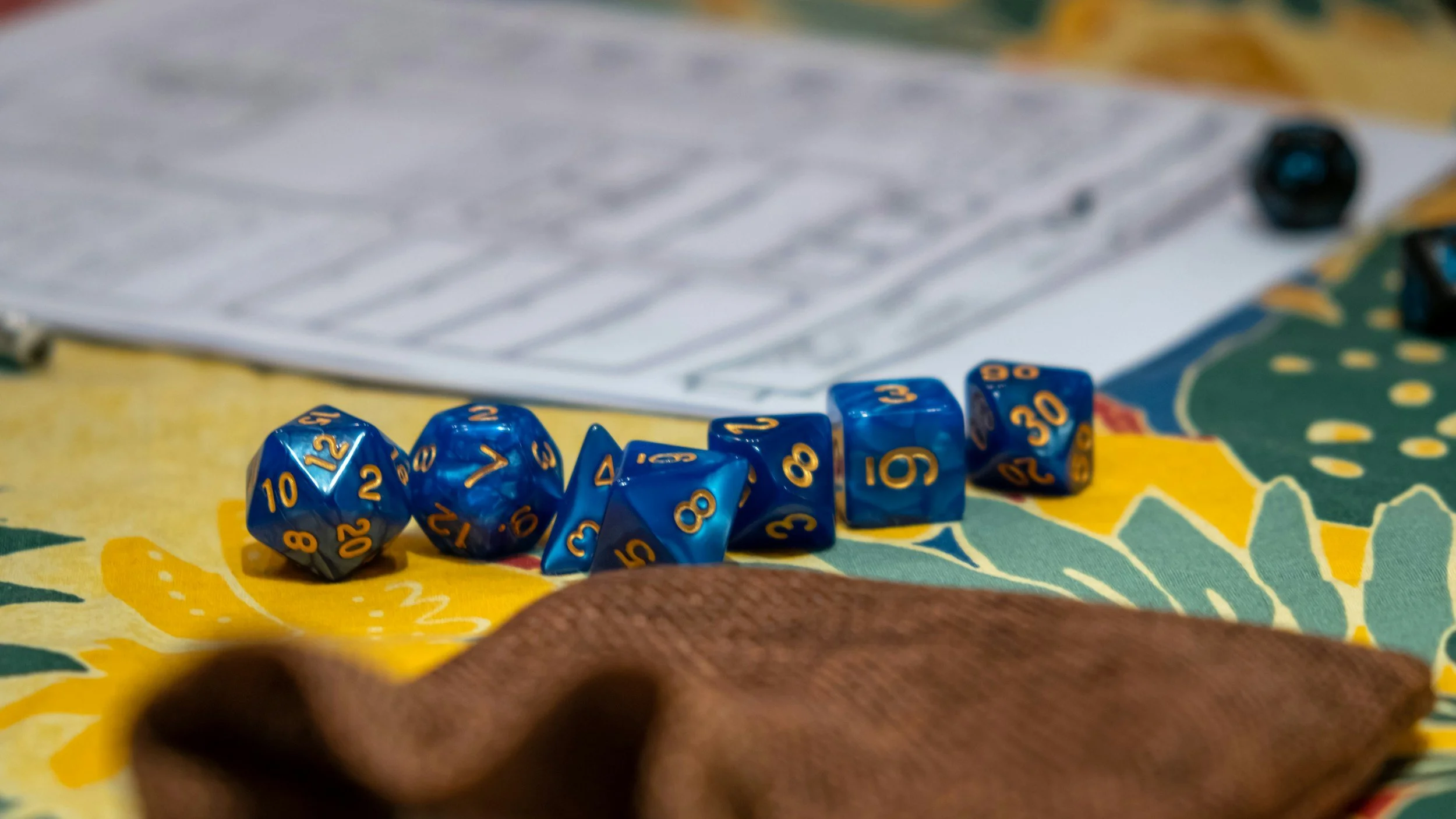
Dungeons and Dragons Group Therapy
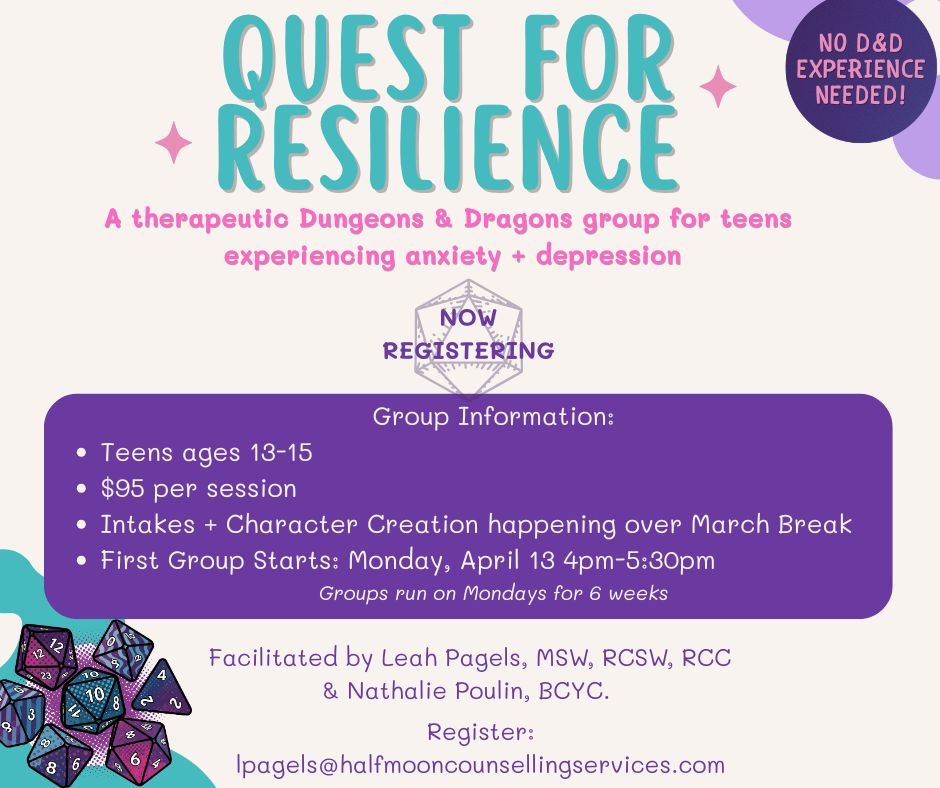
UPCOMING GROUP DATES IN PROGRESS! Please contact us if interested.
Some of the possible mental health benefits of D&D are:
Improved social skills with peers
Increased self-esteem and self-confidence
Ability to express yourself and your needs assertively
Improved impulse control and practice with turn-taking
Stronger creative thinking and problem-solving skills
April 15th 2026
Therapeutic Dungeons & Dragons Group — A Skills-Based, Evidence-Informed Program
Therapeutic Dungeons & Dragons takes the collaborative storytelling of the classic tabletop game and uses it in a structured, clinically informed group to help tweens build real-world skills in a way that feels engaging and motivating. Much like traditional group therapy, participants practice key Cognitive Behavioural Therapy (CBT) and Dialectical Behaviour Therapy (DBT) skills — such as identifying thoughts, emotions, and behaviours, learning emotion regulation and distress-tolerance strategies, and developing interpersonal effectiveness — embedded within gameplay rather than through worksheets or drills. The game’s social problem-solving and cooperative challenges provide natural opportunities for youth, especially those with ADHD and executive-functioning needs, to strengthen communication, impulse control, flexible thinking, planning, and frustration tolerance in a supportive peer environment. A typical session includes structured check-ins, gameplay with targeted scenarios linked to therapy goals, and a reflective wrap-up that helps youth connect in-game experiences to everyday life. This group is co-facilitated by Leah Pagels, MSW, RCSW, RCC, and Nathalie Pouline, BA in Child and Youth Care, combining clinical expertise with developmentally attuned, strengths-based support.
Check out for more details on how Therapeutic DnD works.
What to Expect
Two licensed therapists in every session (one guiding the game, one providing individualized support)
Parent consultations to discuss goals and progress
Storylines designed to help participants practice skills and reach their goals
Targeted help for kids struggling with focus or emotion regulation